How Spain Conquered The Hungry
We crossed an ocean, arrived in Spain, and immediately discovered that conquering the Atlantic was nothing compared to finding lunch

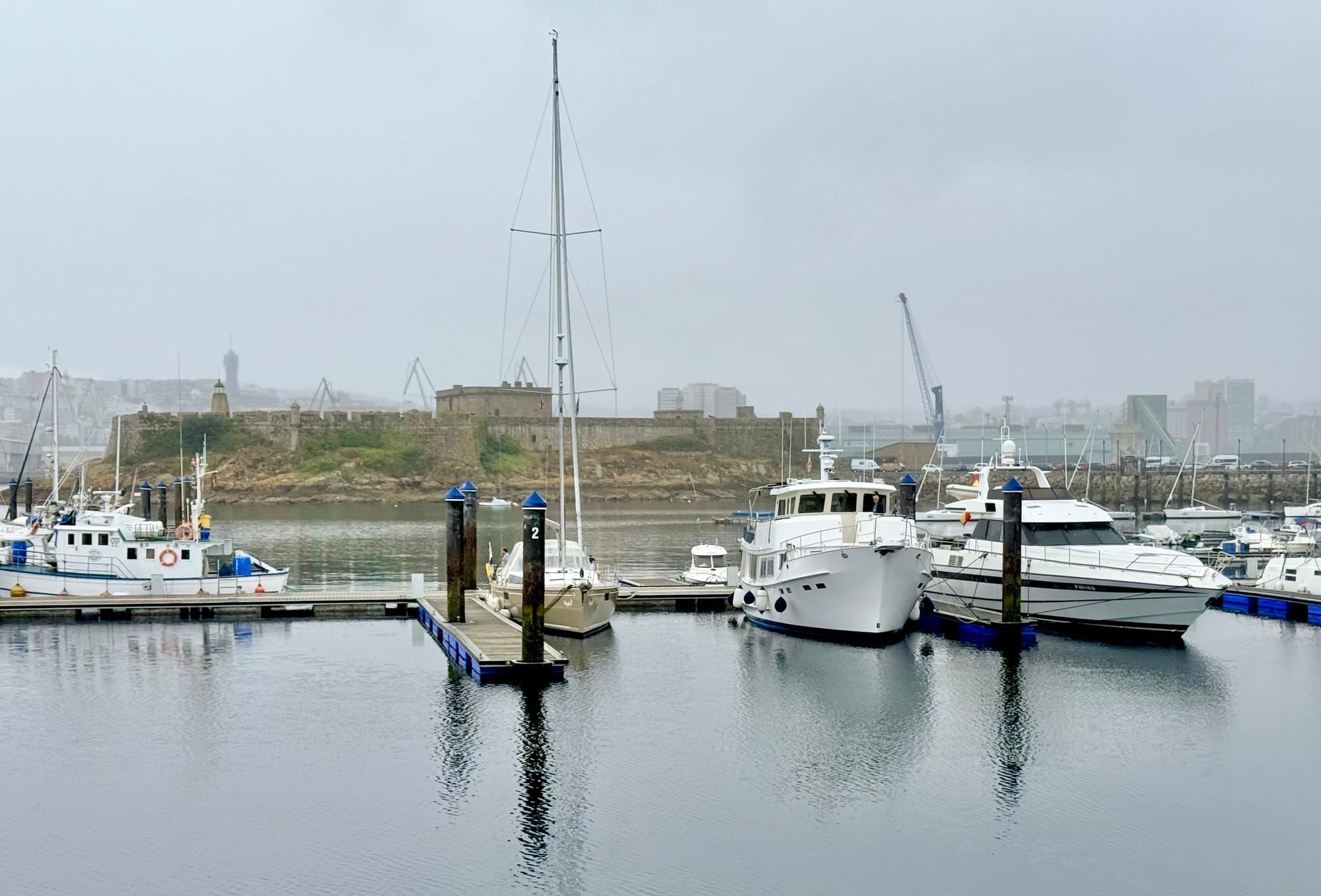
We arrived in A Coruña, Spain feeling both triumphant and slightly underwhelmed: Over the last eight months we had spent a combined 24 days at sea and travelled more than 4,500 miles to get from West Palm Beach to Spain. Along the way we had meandered through ten countries, more islands than I could possibly count, crossed six time zones and experienced just about every climate imaginable (apart from the Arctic ones, which shall remain unexperienced as long as I am part of the crew). So naturally, after all that, Spain greeted us not with sunshine, flamenco dancers and sangria, but chilly winds and thick fog. Where was this “European heat dome” everyone was talking about? It somehow felt unfair. We’d crossed an entire ocean only to find ourselves rummaging through the gizzards of the boat looking for fleeces I hadn’t expected to see again until Scotland.
Little did we know that the weather was about to become the least confusing thing about Spain…
A Coruña is a surprisingly large city on Spain’s northwestern coast. As the fog lifted, I realised it had clearly been around for a while. The first clue was the ancient fort crouching menacingly at one end of the marina as it clearly had for hundreds of years. At the other end loomed a gleaming hundred foot tower shaped like an enormous tuning fork. It looked as though someone had dropped a 1960s science fiction film set into the middle of medieval Spain. I immediately and affectionately christened it the Death Tower.
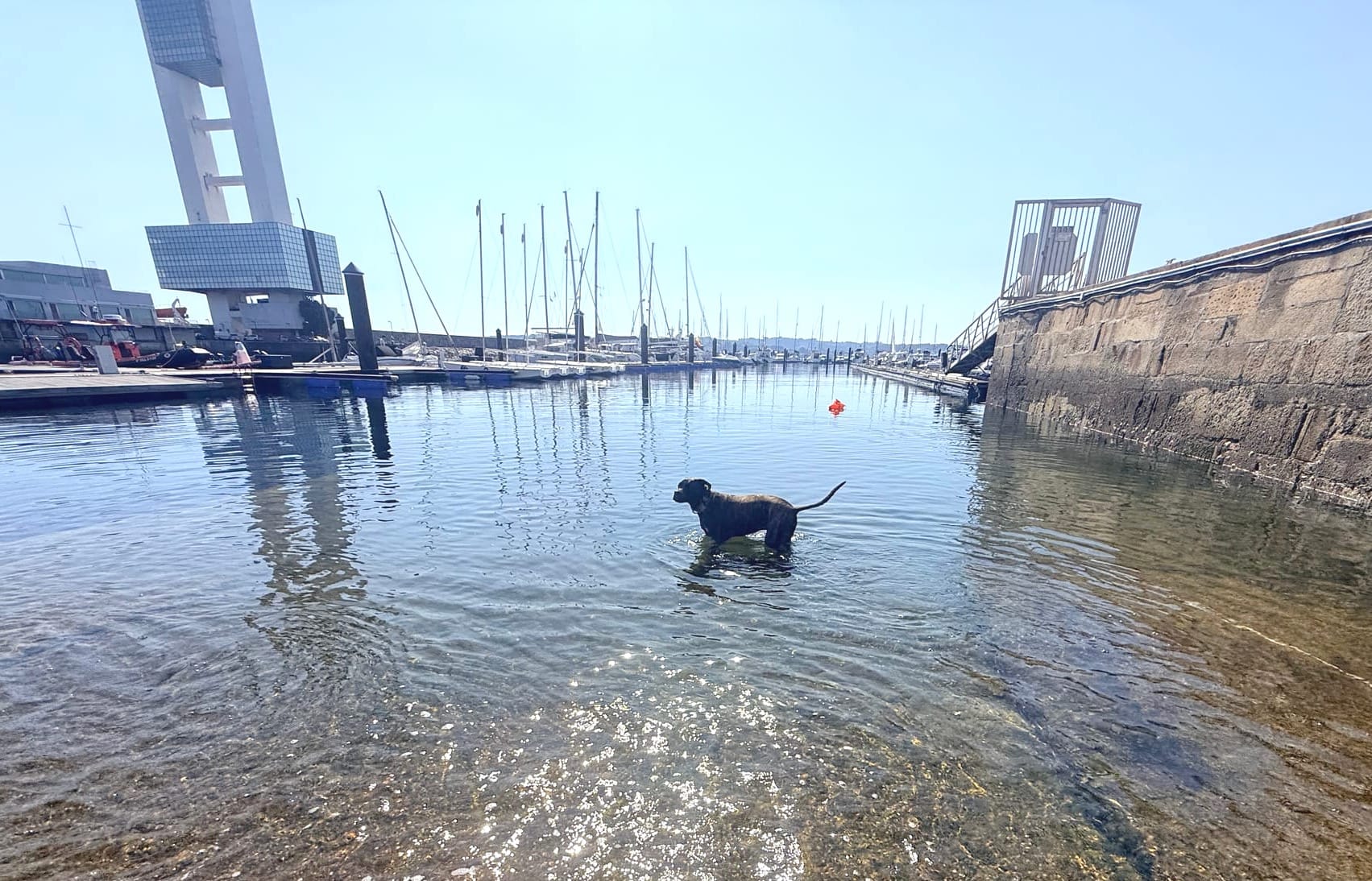
The streets behind the marina were a maze of beautiful narrow flagstones lined with tall ornate balconied buildings squeezed in beside chunky concrete apartment blocks; a kind of Lego and medieval club sandwich. The sixties were a magnificent decade for music, and everyone knows all the best people were born in the sixties, (including your modest author), but in my opinion they should probably have stayed away from architecture.
By lunchtime we had jackets on, Gypsy in tow and stomachs rumbling. Time for our Spanish celebratory lunch! We rambled through almost deserted streets wondering whether we’d somehow arrived during an evacuation or maybe the Death Tower had something to do with it. Where was everybody?
Eventually we found an empty restaurant near the harbour which had just opened. We congratulated ourselves on our excellent timing at beating the lunch crowd, after all, it was one o’clock. This turned out not to be excellent timing at all. It was here we discovered two important things: Firstly, hardly anyone spoke English, despite this being one of the more touristy parts of town. Secondly, Spain apparently considered one o’clock to be an entirely unreasonable time to expect lunch.
At that moment I found myself wishing my Dad were still around. He was a remarkable linguist who spoke fifteen languages and could order food almost anywhere in the world without so much as opening a menu. In fact, on family vacations he would pull out a pen with a flourish, and write all of our orders on the paper tablecloth, and then translate them to the waiter. He seemed to have an aversion to menus, and treated them as mere suggestions for uneducated patrons, thus requiring the ordering process to be a lengthy and colorful debate in the local language. We hardly ever ended up with what we had requested.
Ken and I, meanwhile, had arrived armed with the formidable Spanish vocabulary of “Hola”, “Gracias”, “Cerveza” and “Baños”. Somehow this resulted in us being served crêpes stuffed with minced beef, smothered in tomato sauce, crowned with a lightly fried egg and accompanied by a beer. It wasn’t bad. It simply wasn’t anything either of us had planned to eat… ever.
Over the following week we became experts at being hungry at precisely the wrong times. We’d wander into restaurants only to be told they weren’t serving food yet. Friendly locals would smile sympathetically, decipher our four words of Spanish and point us towards another restaurant, where exactly the same thing would happen. Eventually we realized the problem wasn’t Spain - it was us: The Spanish eat lunch around three in the afternoon and dinner sometime around nine or even ten in the evening. We, meanwhile, were looking for dinner just as the kitchens were closing for the afternoon, then wandering around half delirious by the time they reopened at night. How these people have survived for centuries without eating at six o’clock still remains a mystery to us.
The more time we spent in Spain, the more I realized how much my father would have relished being with us. He didn’t just speak a myriad of languages, he immersed himself completely in every culture he visited. When Murray (his name) visited Italy he became Mario. In France he became Maury. Unfortunately for his family, along with his elaborate food selection process, frequenting a restaurant usually involved ordering whatever horrifying local delicacy the menu was trying to hide from tourists; the roasted head of some poor animal in France, the fried nether regions of another in Germany. Lunch with my father wasn’t really a meal so much as a three hour dissection, punctuated by several leisurely glasses of wine, hyphenated by foreign exclamations, and us three kids quietly wondering whether we could survive on bread rolls for the rest of our lives.
Stumbling around in this strange town in Spain, permanently hungry and hopelessly out of sync with everyone around us, I suddenly realized he’d had the right idea all along: The meal wasn’t just about the food, it was an opportunity to embrace the culture, and demanded a sizable chunk of the day to be shared with family and friends.
One evening we finally found a restaurant just opening at the unbelievably early hour of eight. The hostess listened patiently to our spectacularly bad Spanish before saying, in flawless English,“Just so you know… we serve our food very slowly here.” “We don’t mind,” we assured her, arranging our faces into what we hoped were encouraging, non-manic grins. Four hours later we staggered out just after midnight, wonderfully full but barely conscious…She hadn’t been exaggerating.
Eventually we surrendered. We started sleeping later, eating leisurely breakfasts aboard Moonfleet, having lunch at three, taking an afternoon siesta and not thinking about dinner until nine. Somewhere along the way, Spain had quietly conquered us.
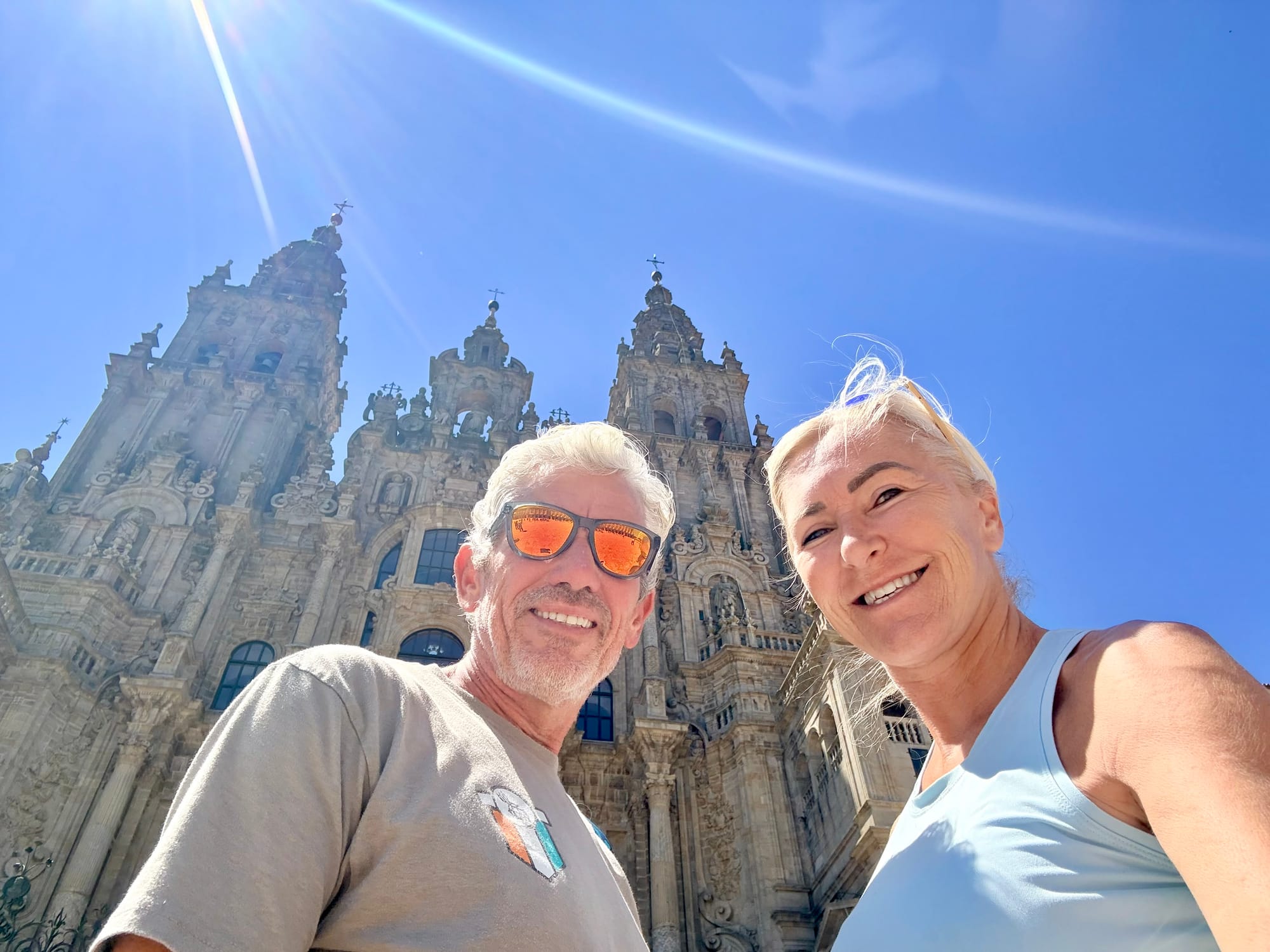
Our final lesson came in Santiago de Compostela. After visiting the magnificent cathedral and watching exhausted pilgrims celebrate the end of journeys, some which had taken weeks, we eventually found ourselves following the hungry crowd looking for lunch. The food market was buzzing. Every table was full and the smell of food was glorious. We searched desperately for an open space. One waiter told us he did have a table, but only for an hour because it was reserved for lunch at three. (Of course it was). ”Can you eat quickly?” he asked.
Finally, after weeks of accidental cultural immersion, our American dining habits became an asset. “Oh yes,” I replied confidently. “We’re exceptionally good at eating quickly!”
Sometimes it pays to have a few American tricks up your sleeve.
My Dad would be horrified.
Sorry Dad.
If you know someone who may like to follow our journey (even in fascinated horror), please forward this email to them and they can sign up below.