How to Stay Married When One of You is the Captain
Eight years of marriage, one trawler, and a sudden realization: I’ve accidentally downgraded my independence while upgrading my relationship. Now I’m learning knots, night shifts, and how to take orders from my husband without starting a mutiny.

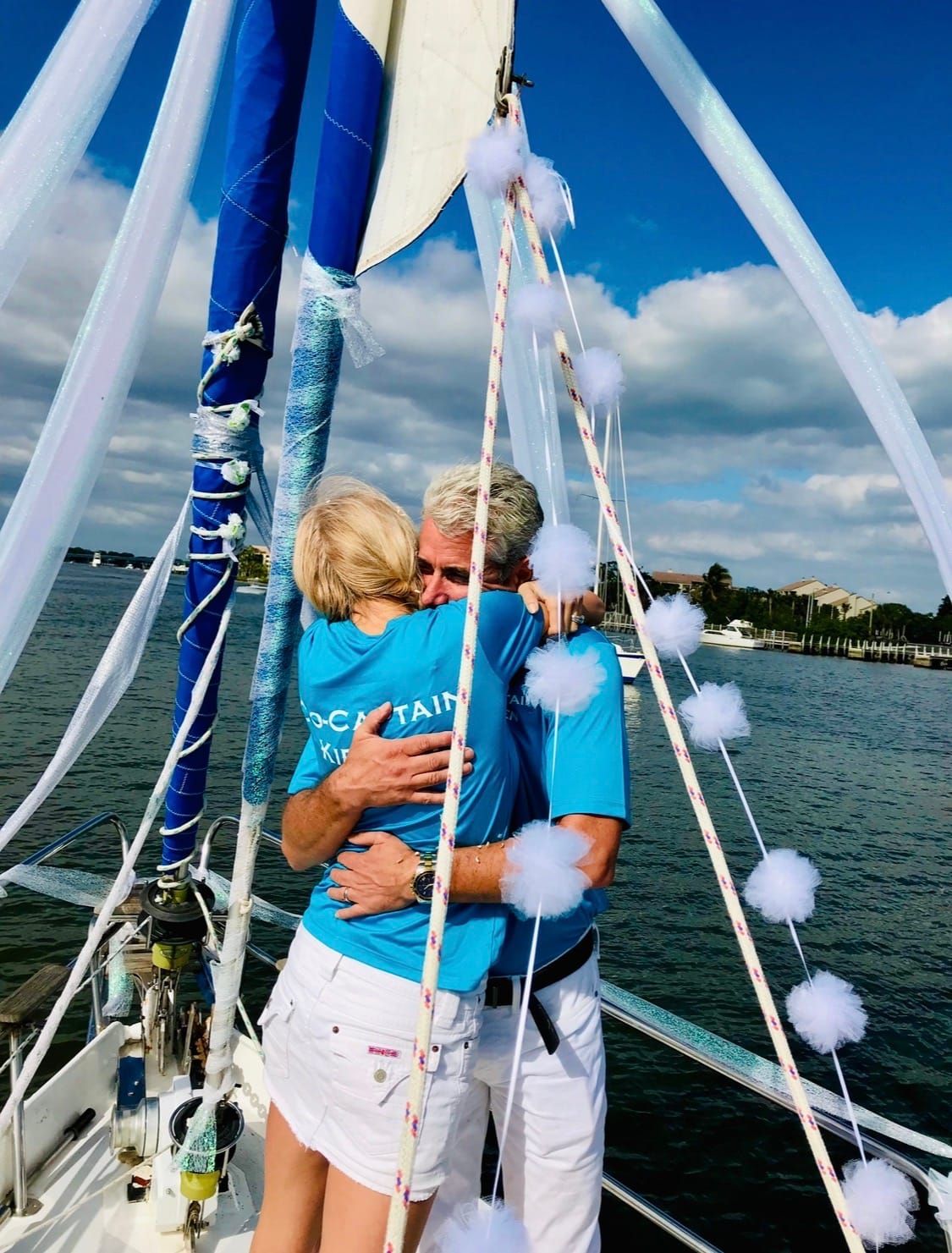
Today is Ken and my eighth wedding anniversary. It seems to have gone by in a flash. Although when I look back on it we have crammed in a lot of stuff...the biggest event being selling most of that stuff, buying a trawler and setting off five months ago on a multi-year nautical adventure with our dog. Somewhere during the months of preparation for this adventure, it dawned on me that we weren’t just planning on staying married, we were upgrading it. The same marriage, but it was about to get real; with fewer exits, much more together time, and a surprising amount of rope,
Before our current boat situation, I had lived a fairly self-directed life. I had been a single mom, a competitive equestrian, started companies, produced films, become a broker, renovated houses, and learned to fly planes. In short, I knew a thing or two about a lot of things. Or, as my ex (practice) husband once shouted mid-argument, I was a “jack of all trades, master of none.” I chose to take that as a compliment. Mainly because I was busy doing all the trades while he was busy doing jack…or more likely Jill.
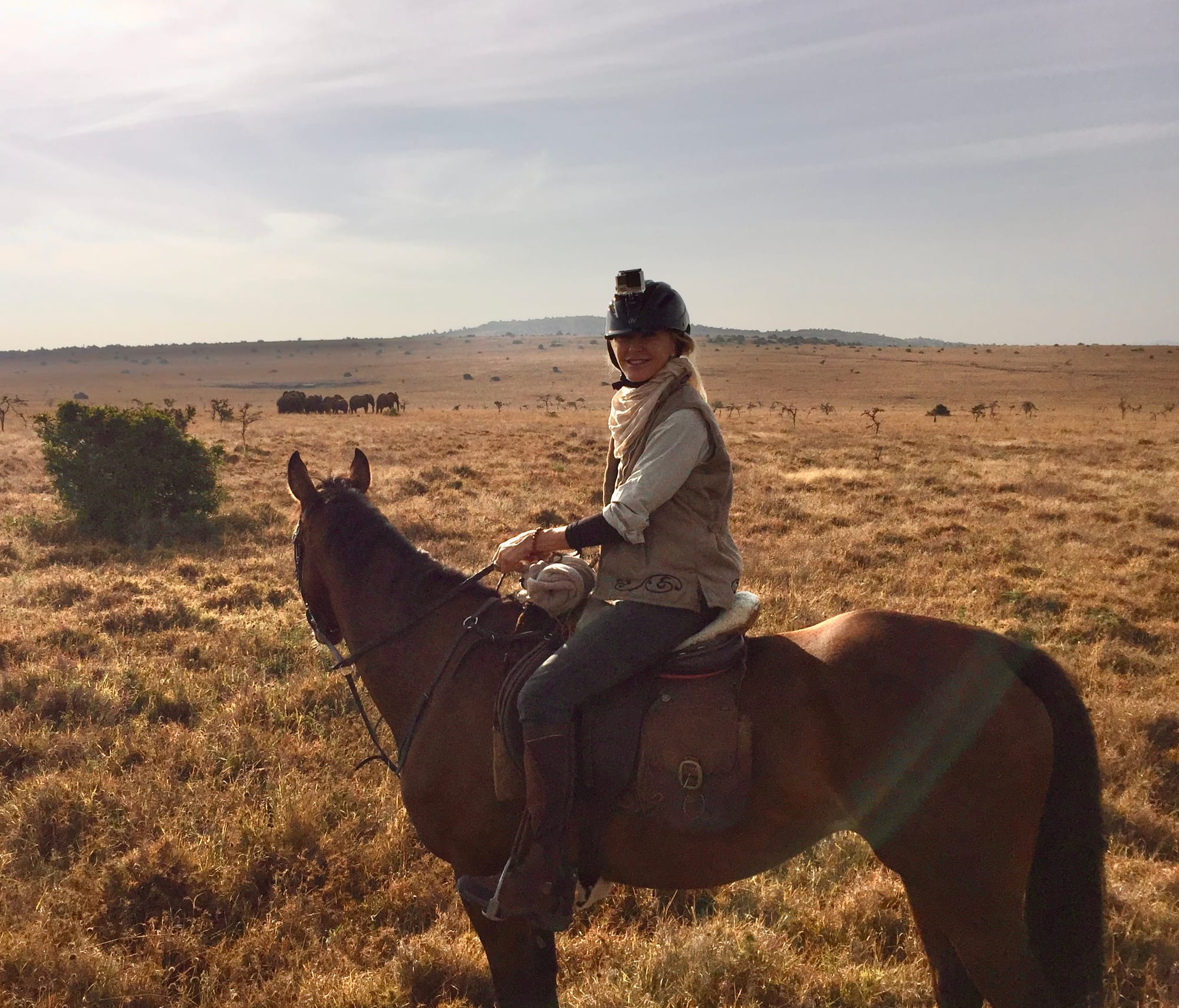
Independence was very much my thing. Determined to be OK on my own after my divorce, I even went to Africa alone to join a horseback expedition safari over the Mara Plains, which at the time felt entirely reasonable and not at all like the opening scene of a murder documentary.
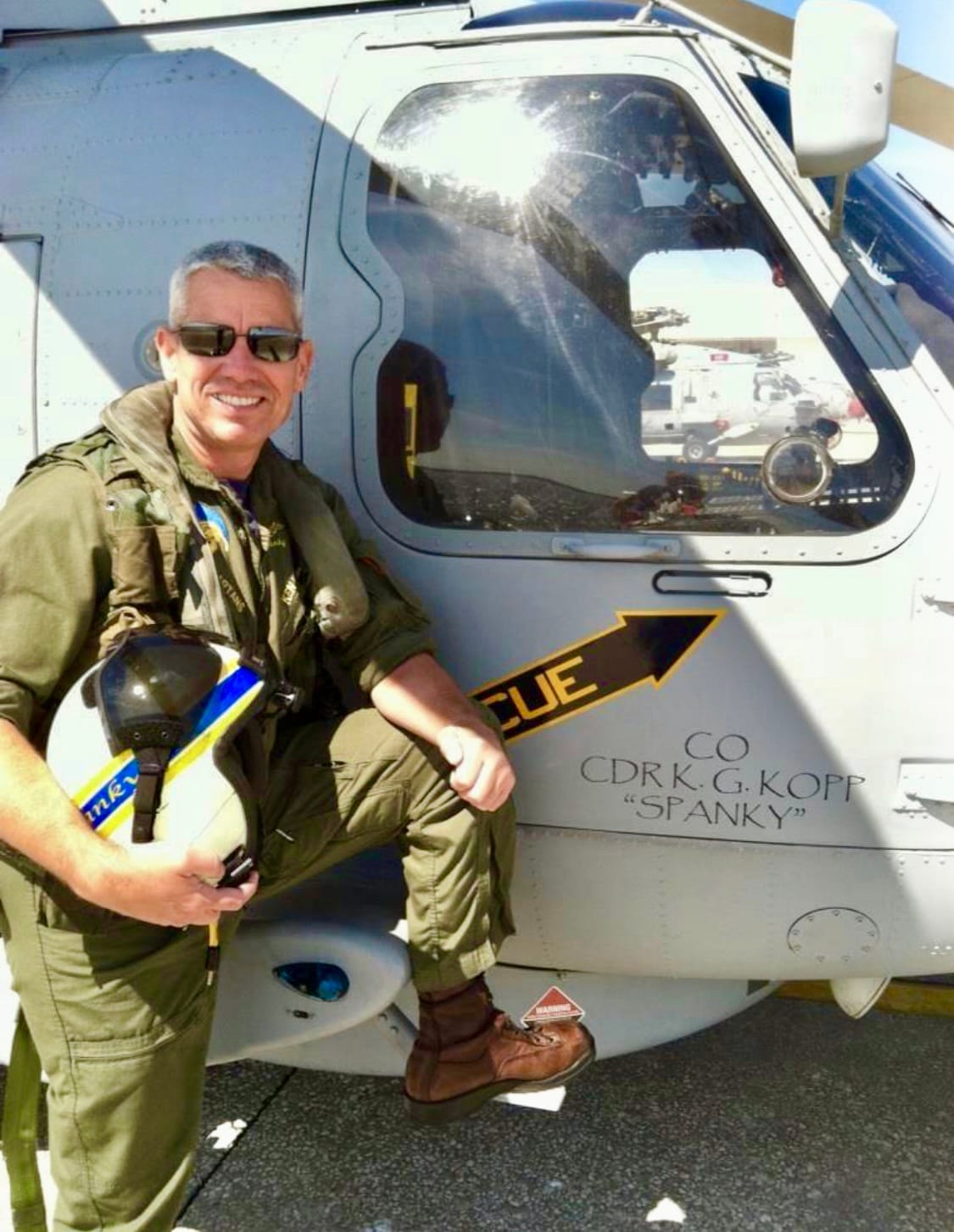
There was just one small gap in my otherwise impressive skillset: Boats. For my 50th birthday, I dragged my children on an ill-fated cruise to Alaska, where all I had to do was click and pay and I still got that wrong - who knew some cruise ships don’t have WiFi and most Alaskan cruises only cater to the geriatric crowd? So, I knew absolutely nothing about boats and boating: I didn’t know knots, navigation lights, nautical rules or how to drive a dinghy without looking like I’d stolen it five minutes earlier. And yet, here I was, signing up for a life where I would be entirely dependent on a floating object… and the man who understood it. Because my Husband Ken, on the other hand, is essentially a human marine manual. As a thirty year retired Navy Commander, and a helicopter test pilot to boot, he is a walking encyclopedia on all things nautical, nerdy, and also holds a black belt in celestial navigation.
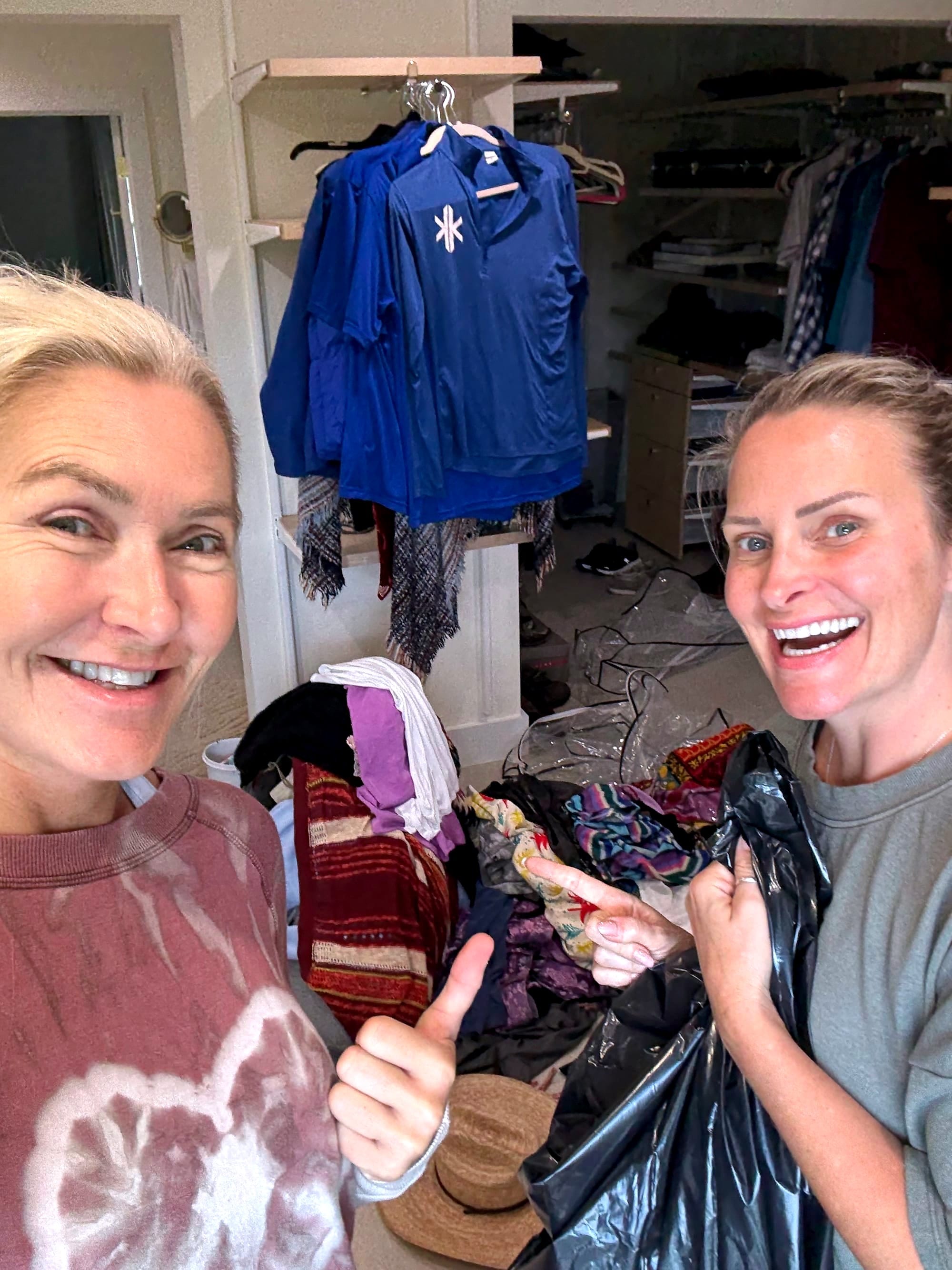
As I was busy selling off our worldly goods, Ken breezed through his 100 ton Captain’s license - more for the fun of it and the insurance discount - than actually learning anything new. And once we were done squeezing what was left of our belongings onto our sixty foot trawler, we set off on our adventure.
At first, this seemed like an excellent arrangement: Ken would handle the complicated, technical, potentially life-threatening parts of boat life, and I would focus on what I do best: documenting the adventure, enjoying the destinations, making the odd sandwich and being gracefully transported around the world like an overindulged female Ernest Hemingway. This worked beautifully until it didn’t. Because it turns out, a large boat is less like a car and more like a floating island. You can’t just pop out to take the dog for a walk. Leaving requires either operating the vessel, launching the dinghy, or committing to a lengthy swim - usually a bold life choice. And I couldn’t do any of those things on my own.
In short, my world, which had once been expansive, variety driven and self-directed, had quietly shrunk to the size of whatever I could reach without assistance. I felt like a very tall toddler in a playpen. Which is not a great feeling for someone who has always prided herself in her ”Ive got this” mentality. I felt stunted, stumped and pretty useless.
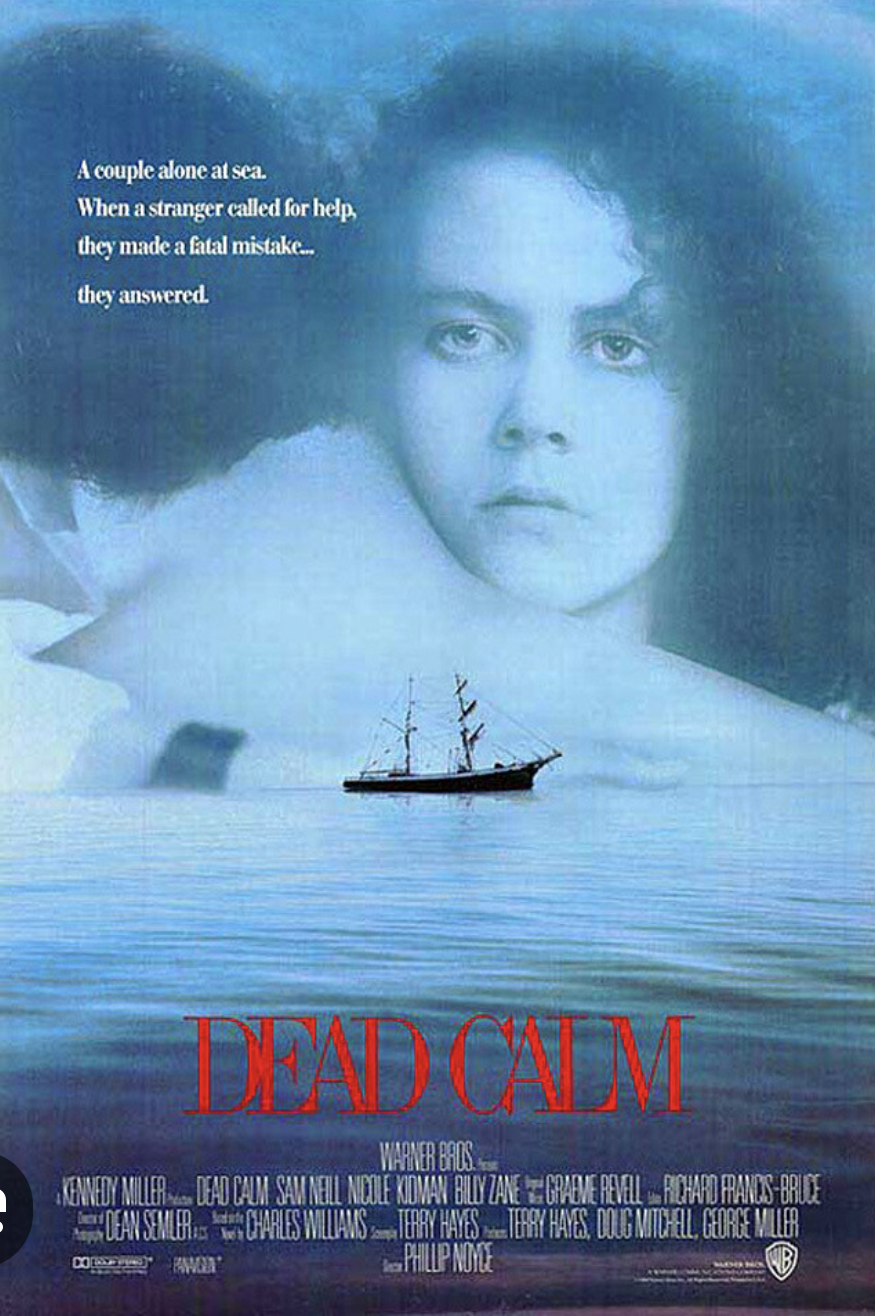
Meanwhile, the Atlantic crossing we had been casually referring to as “someday” for years has started looming like a very large, very wet deadline. In fact as I write this, it is less than one month away. We have started to plan for this enormous undertaking and, briefly considered bringing along crew to help us. But after hearing numerous stories of weird crew members from other cruisers, and having inadvisedly re-watched the classic thriller “Dead Calm”, the idea of being trapped on a boat for two weeks with someone who turns out to be…odd… felt like a far greater risk than simply becoming competent myself.
So I decided to learn this boating thing - but it hasn’t been easy. My knots refused to behave like knots and initially looked more like I was trying to crochet under pressure. I have more bruises on my legs than a forgotten banana (which I also learnt are bad luck on a boat). It took me five months to be able to plug in the fresh water hose before a female friend showed me how to use all of my body weight like a Sumo wrestler to push the darn thing in. My startup checklist for the boat is now longer than the one I used for an actual airplane, which feels both humbling and mildly insulting to aviation. And I can now follow the not so simple 10 step process to switch the integrated navigation system on and plug in a simple route without inadvertently sending spinning into a 3 hour reboot mode.
And then there is the small matter of my new role. Because being a good crew member is not the same as being a good wife. A good marriage, in my opinion, is a partnership. Two people, equal but different, moving through life together. A boat does not care about that philosophy - on a boat, only one person is the Captain. And for the very good reasons I have outlined, that someone is not me. And on a boat, for safety, you must listen to the Captain. Especially when the Captain is urgently informing you that you are about to do something catastrophically stupid, like threading your finger through a moving anchor chain. Adjusting to seeing my husband not just as my partner, and equal, but occasionally as my boss, has been… a “character-building” experience.
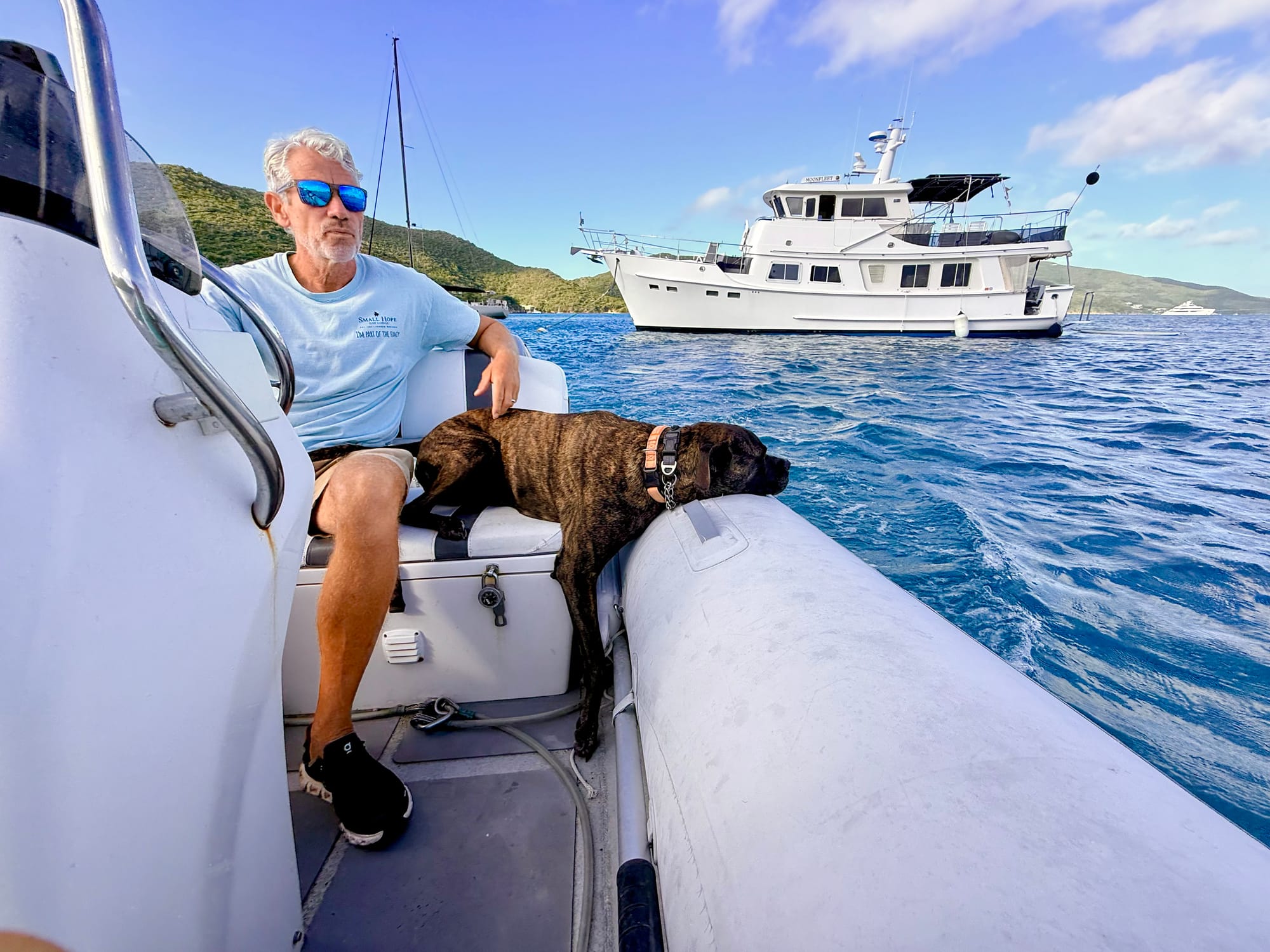
For him, I suspect, it has been equally challenging. Being retired military from, what I understand, a quite lofty rank, the last time he was operating on boats, he was hunting international drug Tsars and participating in wars alongside his own platoon of highly trained professionals. Now he has been reassigned to an obstinate wife and a spoilt dog who refuses to potty on command. It is, by any metric, a stunning demotion and significant decline in operational efficiency.
Commander Ken was used to giving directives that were followed immediately and without question. I, on the other hand, like to take a moment to evaluate whether I agree with the directive, consider alternative approaches, and occasionally reject it on principle. The dog simply crosses her legs for 29 hours and stares at us both with noisy defiance. It has been a bit of a stumbling block for all three of us.
So we have had to figure it out. And of course, as anyone knows, the best way to solve a problem is, obviously, to buy lots of new gadgets. Among them, we acquired a second, back up Starlink system, thermal night vision binoculars, anti nausea electric pulse bands, and a supersonic coffee machine. We also invested in Bluetooth headset mikes so we can communicate from opposite ends of the boat without screaming at each other like two seagulls fighting over a single French fry, which is both inefficient and deeply unattractive. These headsets are called “Marriage Savers” for a reason; I have witnessed couples yelling at each other whilst trying to maneuver a boat, and, although I confess I have smugly watched on thankful that it wasn’t us… yet… I didn’t want to be “that” couple. The headset mikes are great, however, they create another challenge - it means we have had to eliminate the long-standing marital tradition of muttering things under our breath, and have replaced it instead with silent but deeply expressive eye rolling. (Note: one must be careful when walking on a moving boat whilst eye rolling as it messes with your balance, and therefore is yet another worthy skill to hone).
Ken has also had to accept that no amount of detailed explanation involving systems, charts, or anything containing the word “adiabatic” is going to land with me. My brain simply closes for business. What does work is this: he explains something as simply as possible, and then I repeat it back in my own language. For example, a complex explanation about wind direction, current, and drift might be delivered as: “We need to correct for a three-knot cross current setting us off track and a 15-knot easterly impacting our apparent wind and leeway, so we’ll adjust our heading accordingly to maintain our intended course over ground rather than our heading through the water.” My translation would be: ““So the ocean is basically trying to shove us sideways like a hungry Carnival cruiser at an all-you-can-eat buffet, and we need to aim slightly on the wonk on purpose to end up right.” This system, surprisingly, has been working (with plenty of mutual eye rolling).
I have also had to develop a tolerance for night shifts. The last time I was awake at four in the morning, I was in a nightclub in London in my twenties, indulging in shady activities that did not involve navigational lights or collision avoidance. Now, staying alert through the night (sober) is essential. We travel at about seven knots, which means the boat has to keep moving well beyond daylight if we want to get anywhere before we are permanently reassigned to Davy Jones’ locker. Our longest passage so far was 29 hours, and I could not keep my eyes open for more than four at a time, while Gypsy maintained her now legendary ability to refuse to go to the bathroom under any circumstances whatsoever.
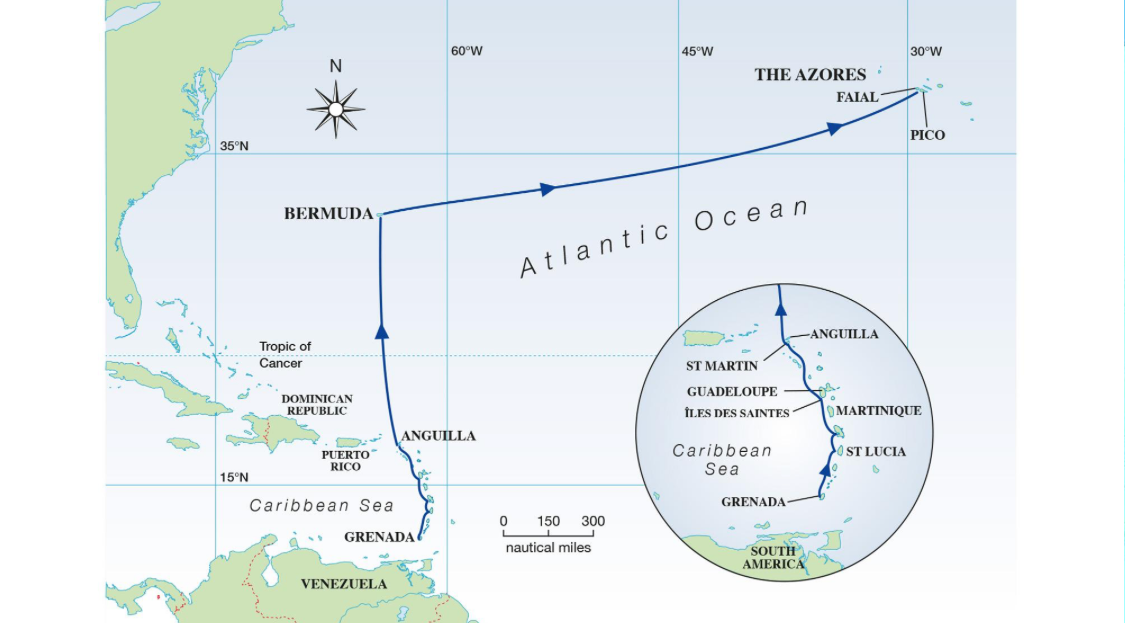
And time is flying by while we slowly cruise along; we have our first uninterrupted five-day passage coming up in three weeks when we leave St Thomas for Bermuda, so all of us will need to pull ourselves together. Or, at the very least, coordinate our dysfunction into something resembling teamwork. The Atlantic crossing from Bermuda to the Azores is about 820 nautical miles, which translates to roughly fourteen nights of continuous motion. There is no pulling over for a quick cup of tea and a rest in the middle of the Atlantic, and since we will be a crew of two (plus the dog) we will have to divide the night into shifts that feel manageable and do not result in me forming a meaningful relationship with an inanimate object called Wilson. I am currently aiming for five-hour stretches, which feels optimistic, but with copious coffee and a good podcast it should be manageable. But for 14 nights in a row? There is no preparing for that.
CREW MEMBERS can follow our journey in real time on the page:
If you would like to follow us, and have not yet signed up, then press the button below and join us on the high seas…
Join the Crew
Like following two semi-capable adults who sold everything and sailed into the unknown? Become a crew member and get new episodes, stories and questionable decisions delivered straight to your inbox.
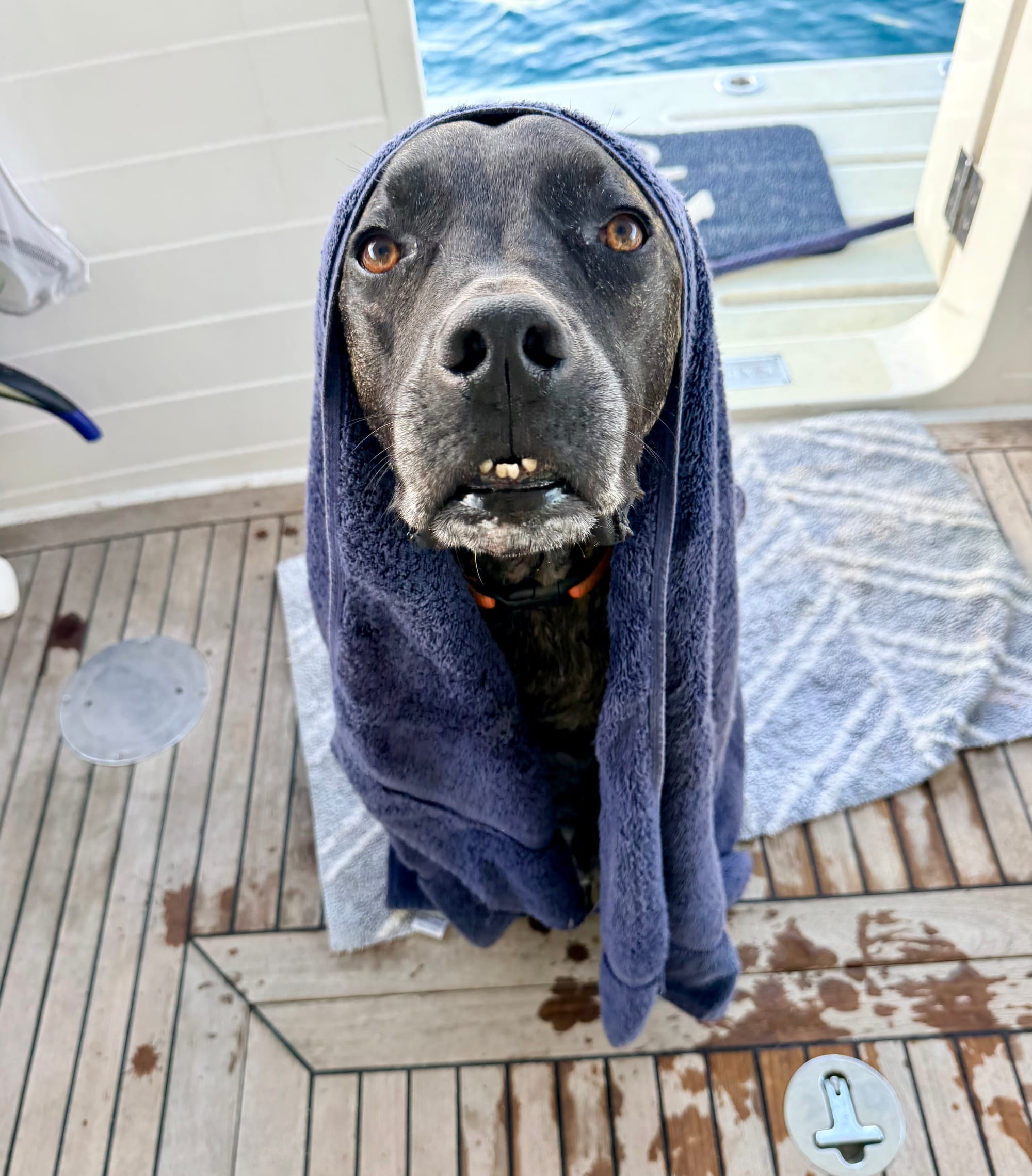
Gypsy, meanwhile, will be presented with her square of astroturf, with a generous sprinkling of carefully curated, highly odorous “previous offerings” and a firm sense that this is no longer a negotiation. Failing that, I suppose the carpet becomes a secondary option. I mean at least no neighbors will be stopping by for a quick cup of tea in the Atlantic and I doubt Somalian pirates are judging housekeeping standards…
What we have also learned, slowly, is that mistakes are part of this. We are still very much a work in progress, but I can now, armed with laminated checklists, and a well stocked medical kit, start the boat on my own, navigate a tight anchorage, and operate the windlass without sacrificing any fingers. I have not yet attempted docking, which still induces a mild internal collapse, but I am getting closer to a point where Ken might be able to close his eyes for a nap without quietly reviewing his life insurance first. I am becoming a moderately useful First Mate.
And somewhere in all of this, something else has been happening.
The independence I thought I was losing has not disappeared. It has just changed shape. It is no longer about doing everything on my own. It is about learning how to be capable in a completely unfamiliar world, and how to rely on someone else without feeling diminished by it. It is about trust, not just in Ken, but in myself to adapt, to learn, and to keep showing up even when I feel entirely out of my depth.
Eight years into this marriage, it turns out the adventure is not just where we are going, but who we are becoming in the process of getting there. So perhaps this is not a loss of independence after all. It is a different kind of strength entirely.
And if all goes to plan, by our ninth anniversary, we will be heading into the Mediterranean, slightly more competent, hopefully still with a full set of digits, a potty trained dog and yet still very much figuring it out… just on the other side of an ocean.
Join the Crew
Like following two semi-capable adults who sold everything and sailed into the unknown? Become a crew member and get new episodes, stories and questionable decisions delivered straight to your inbox.