The Things We Leave Behind
How a suitcase named Gigantina, a collection of baby teeth, and a trip back to London taught me what I actually miss living full time on a trawler.

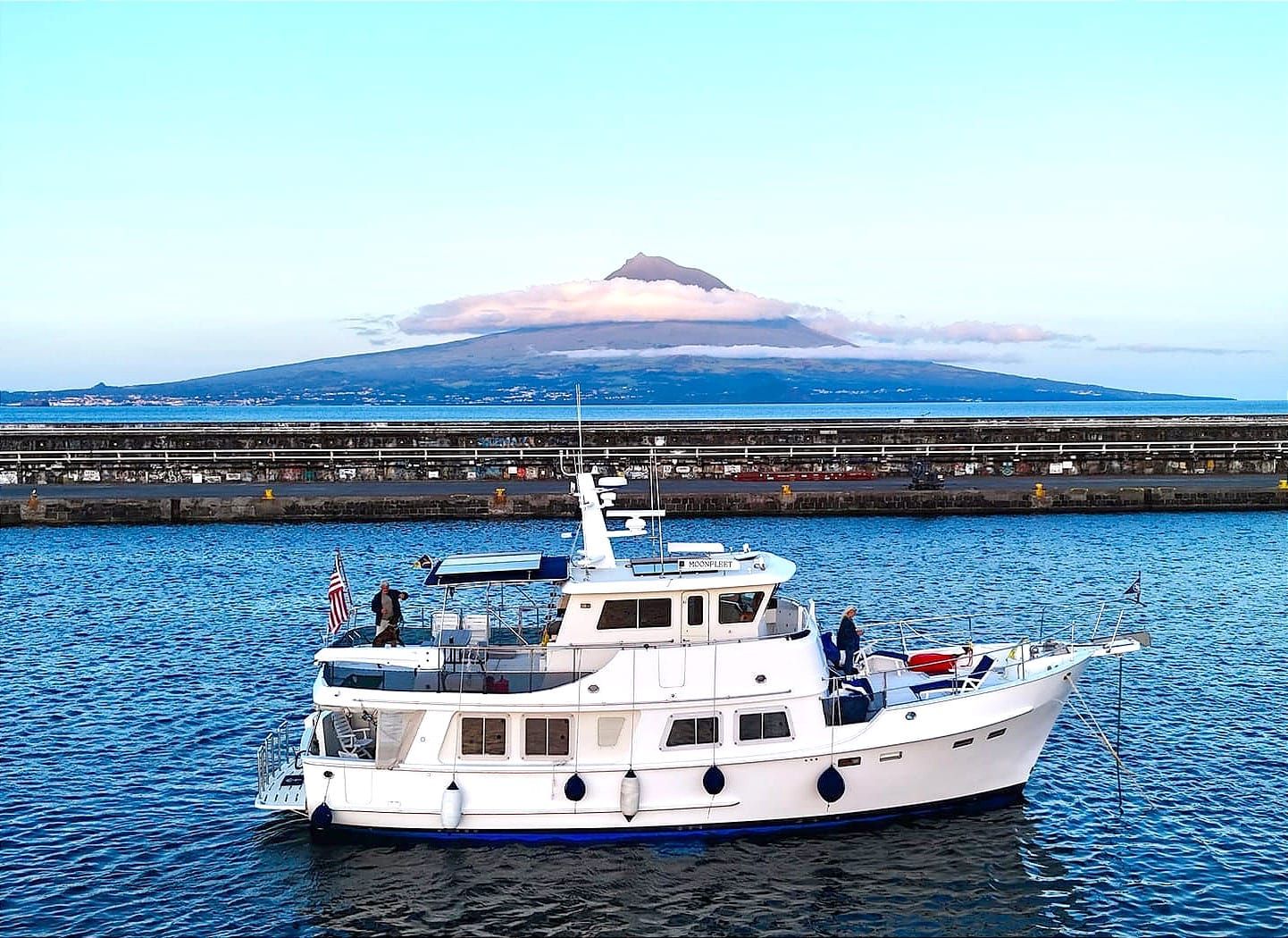
It’s been eight months since we lost our minds, sold almost everything we owned-except the dog-and turned our backs on land life.
Eight months of living in our self-contained floating world. Eight months of carrying our little home, our possessions, and occasionally our adversities from country to country aboard a sixty-foot trawler. Eight months of pursuing semi-retirement while somehow working harder than ever and collecting adventures like I collect interesting rocks.
“How’s it going?” ask concerned, yet morbidly fascinated, friends. Most of the questions involve two subjects: how we cope without regular contact with family and friends, and how we willingly gave up all our worldly possessions.
The second question is easier to answer: There is, unsurprisingly, a stark difference between living on a boat full time and living in a house. For a start, there is a lot less room. Being somewhat of a hoarder-or perhaps just a normal person approaching the latter years of life-disposing of a lifetime’s worth of carefully accumulated treasures was a challenge of epic proportions. Most of these possessions had little or no monetary value but nevertheless meant the world to me. What, for example, does one do with a collection of baby teeth stored in a Tiffany’s christening cup? Or wedding photographs featuring my ex-husband who, despite being a certified asshat, remains my children’s father? Or the collection of magazine photos of me during my brief Palm Beach socialite era, a period of my life my vanity seemed particularly reluctant to release?
And that was merely the beginning.
Before we launched, we spent a year selling what could be sold and distributing everything else amongst patient and bewildered family members “for safekeeping.” Eventually, former Navy Commander and pro-minimalist husband relented and agreed to a small storage unit.
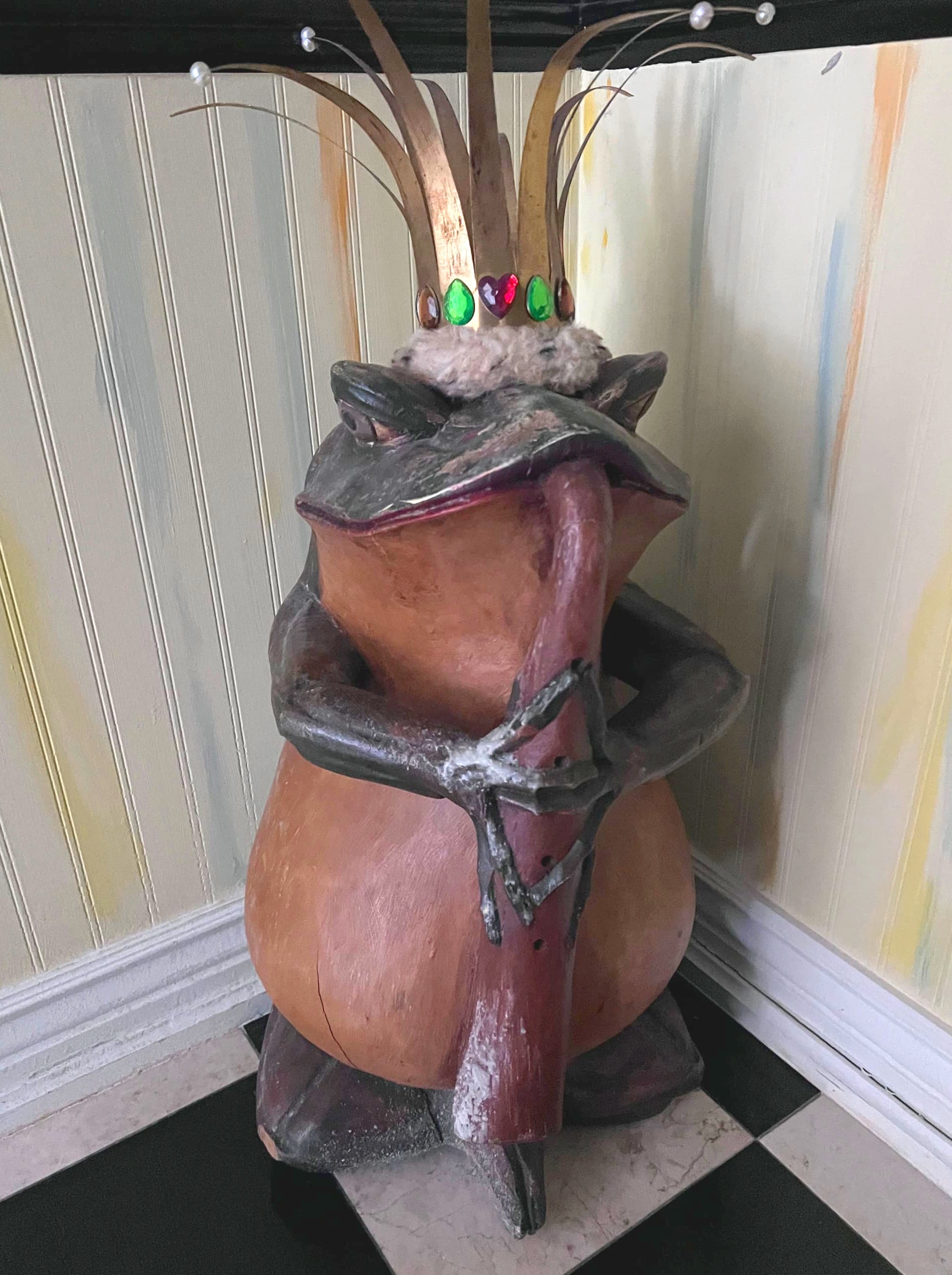
The baby teeth went in there. The magazine photos and at least the wedding photos quite rightly went in the trash. Although one sister-in-law shockingly rejected several of my more tasteful offerings, my daughter-in-law fortunately shares my questionable decorating sensibilities. She happily adopted my three-foot-tall solid wood flute-playing frog sculpture, my collection of checkered kitchenware, and approximately half our eclectic furniture collection. Gone, but certainly not forgotten, as I have made it abundantly clear that one day I shall want everything returned. Whether that constitutes a promise or a threat remains unclear.
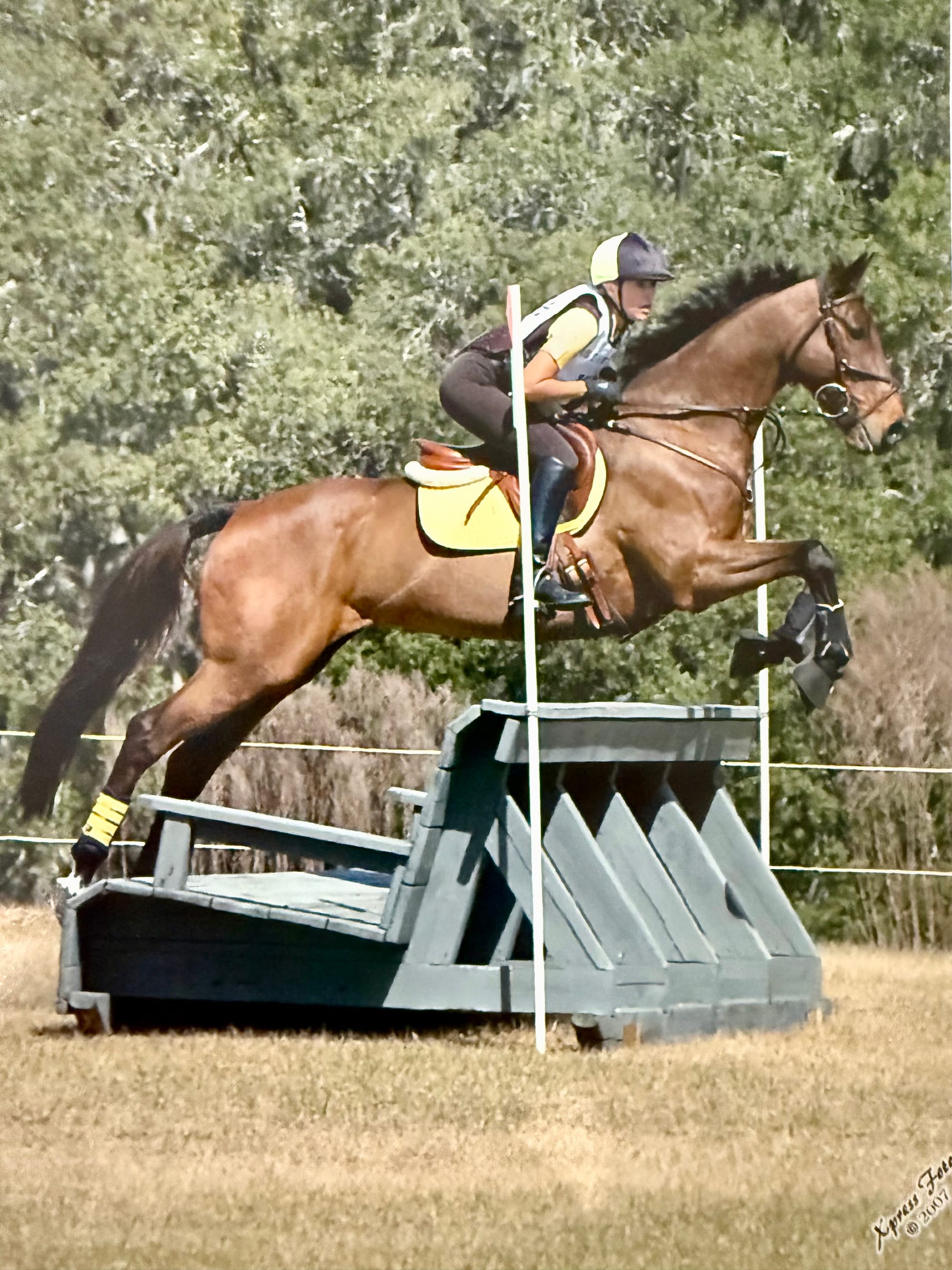
My sister and daughter were much more enthusiastic about helping me reduce my ridiculously vast clothing collection. I have lived several entirely different lives: Former London media type, Palm Beach socialite, Equestrian, Pilot, Business owner, Mother… And briefly, a person who believed yoga retreats might reveal the meaning of life. Each version of myself apparently required its own wardrobe, some of them possessed an alarming quantity of spandex. However, neither my sister nor daughter were blessed with my unusually generous foot size, so my extensive shoe collection found new homes elsewhere. Most notably with a delightful transvestite on Poshmark called Bill, who loved my 6 inch heel silver Laboutins.
Join the Crew
Like following two semi-capable adults who sold everything and sailed into the unknown? Become a crew member and get new episodes, stories and questionable decisions delivered straight to your inbox.
Life on a boat is, by comparison, refreshingly minimalist. The advantage is freedom from decades of accumulated clutter. The disadvantage is that there is no Amazon truck arriving any time soon. Initially, I did make valiant attempts to continue shopping as though nothing had changed, but this didn’t quite go in my favor; parcels can take weeks or even months to arrive in remote locations. By the time they do, the weather window has usually opened and Captain Silver Fox has already announced our departure. One package we missed in St. Thomas is currently enjoying an extended Caribbean cruise courtesy of some helpful cruising friends who will mail it when they find a post office, or maybe never. Another remains imprisoned in a DHL office in Bermuda because yet another allegedly perfect weather window required immediate action. At this point, I have largely given up ordering things, now we rely on visitors to bring supplies. Which leads neatly to another problem.
When we started this adventure, we imagined family and friends would merrily fly out to wherever we happened to be and explore exotic destinations with us. This turns out to be significantly easier in theory. Sailors have a saying: “You can arrange to meet someone at a specific time or a specific place, but never both.” The problem is that by the time we know where we’ll be, flight prices have risen to the level usually associated with ransom demands. And telling anyone where we will be on a specific date is essentially gambling with Neptune. And Neptune always wins. Besides, not everyone’s dream expensive vacation involves flying halfway across the world to live in close quarters sloshing around with a middle-aged couple and a large hairy dog. As a result, in-person family time has become unsurprisingly scarce. And that, I discovered, was much harder than giving away furniture…
After five months without seeing my daughter Elsa, both of us had reached critical Mummy Implosion. She was moving out of university halls for the summer and into a London flat near her new job. She needed her mum and I needed her. So no sooner had we tied up in the Azores than I boarded a plane and headed back to London.
Now, much as I would have loved an Enid Blyton childhood spent romping through woodlands with a pony called Brownie, reality was somewhat different. I grew up in suburban London. My mother’s idea of an educational outing involved a small building called Hornimans Museum, the only place she could reliably find her way to (no GPS then!), which contained, to our continual morbid fascination, a genuine shrunken head on a stick and an enormous over-stuffed walrus. (It turns out the taxidermist had never seen a real walrus and so enthusiastically filled out all of the walrus’s creases). I also spent years commuting into central London before emigrating to America. So London was hardly unfamiliar territory.
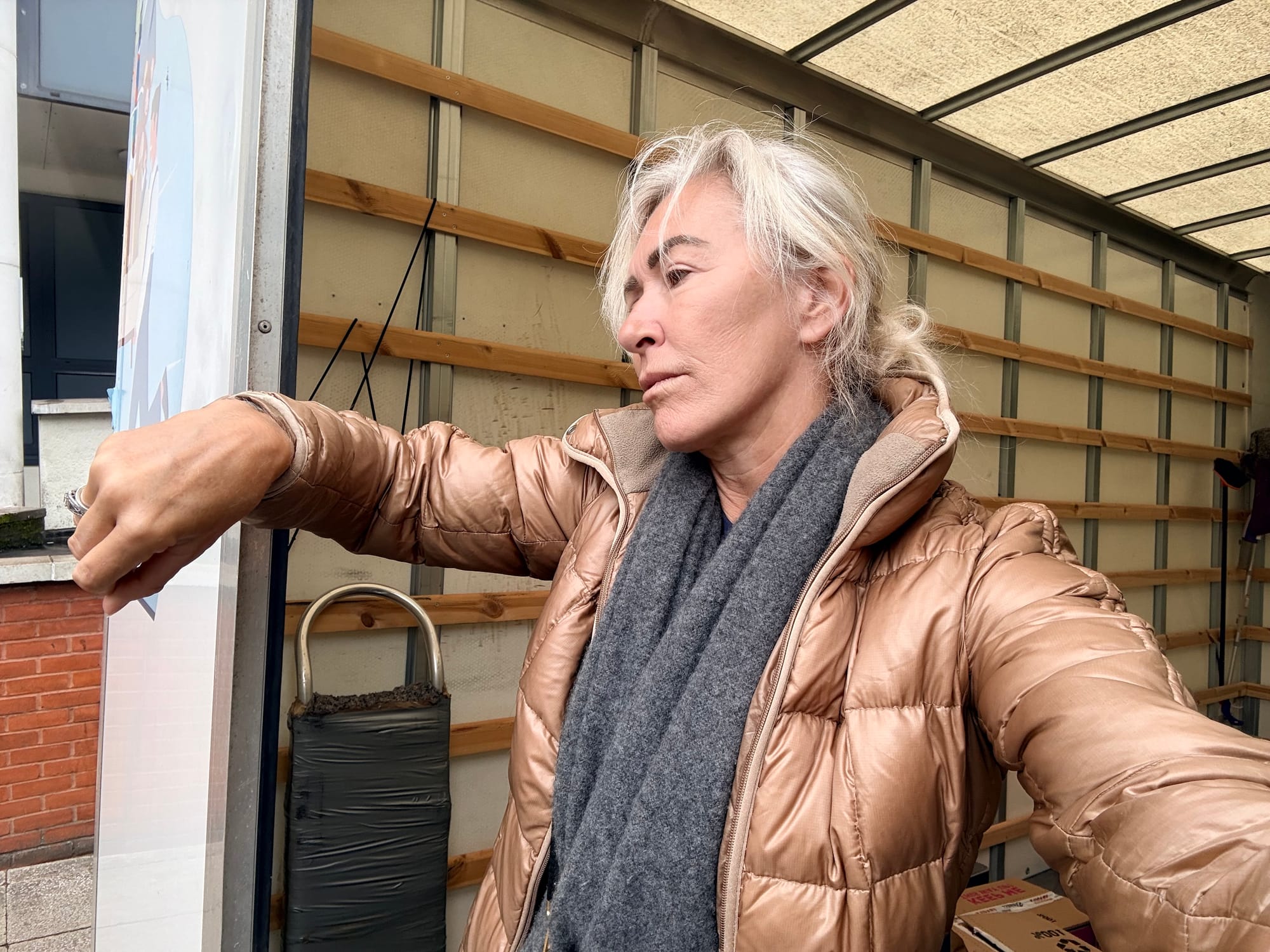
Yet when I arrived this time something felt different: London hadn’t changed; it was still crowded, a little grubby, expensive and permanently late for something. The alarming realization was that I had changed. The first thing that struck me was the sheer volume of people. People everywhere! Thousands of the buggers moving purposefully in every conceivable direction at a speed that suggested there was a Laboutin fire sale nearby. Navigating my oversized suitcase, known affectionately as Gigantina, through this human obstacle course became an endurance sport. Everyone seemed able to avoid colliding with one another. The only thing anyone was tripping over was me.
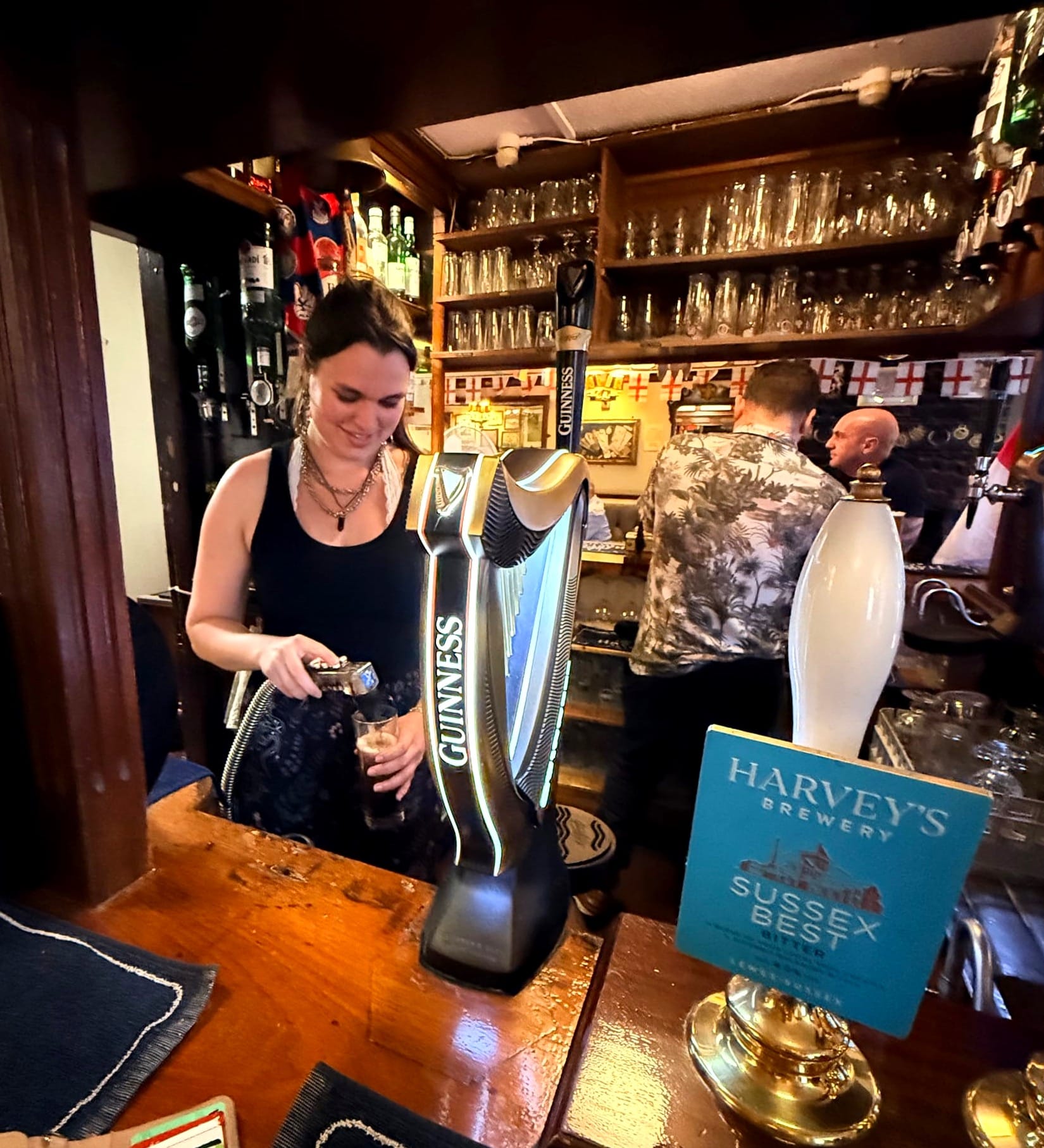
Later, after abandoning Gigantina in my daughter’s flat to recover from her recent travel trauma, Elsa took me to the ancient London pub where she now works. As she strode effortlessly through the streets, pointing out interesting buildings, shops and landmarks, I found myself lagging further and further behind. When had this happened? When had I become a slow walker? More disturbingly, I realized I had become one of those irritating tourists I used to get trapped behind on Oxford Street. The sort of person who stops unexpectedly to look at a pigeon and causes a twelve-person pile-up.
Traveling by Uber was no better. Anyone who has ever driven me anywhere knows I am an anxious passenger. This stems from an unfortunate Halloween party involving Captain Silver Fox, two zombie pirate costumes, a golf cart and a canal. (The details of this debacle deserve their own story). But after months of traveling at seven knots, London traffic felt terrifying. Every lane change appeared to be a near-death experience. I spent most journeys gripping the door handle and silently writing the epitaph on my gravestone, which of course would be wordy, touching yet humorous…
Then there was the food. In remote cruising destinations, fresh produce can be scarce. I once visited a grocery store in a tiny Bahamian settlement that appeared to be someone’s modified living room. An elderly woman with no teeth and a shower cap sat in a rocking chair watching television and croaking prices at shoppers. The vegetables were displayed like the exhibits at Hornimans Museum. A single melon occupied an entire dusty shelf. “Twenty dollars,” she barked. Two carrots huddled together at the bottom of a box, apparently drawing comfort from one another “A dollar each,” she brayed. Something green in a plastic bag was undergoing a rapid transition from lettuce to liquid. I didn’t ask the price and left with a can of mung beans.
By comparison, entering the Waitrose supermarket near Elsa’s flat felt like arriving in the promised land. Rosy apples spilled forth from displays. Assorted cheeses stretched toward the horizon. There were chutneys for occasions I had never previously considered. I became completely overwhelmed and then began throwing things into my basket with the enthusiasm of a squirrel prepping for a nuclear winter.“Mum,” Elsa said gently, removing smoked haddock from my shopping cart, “you do realize this isn’t the last food in London?” She did have a point.
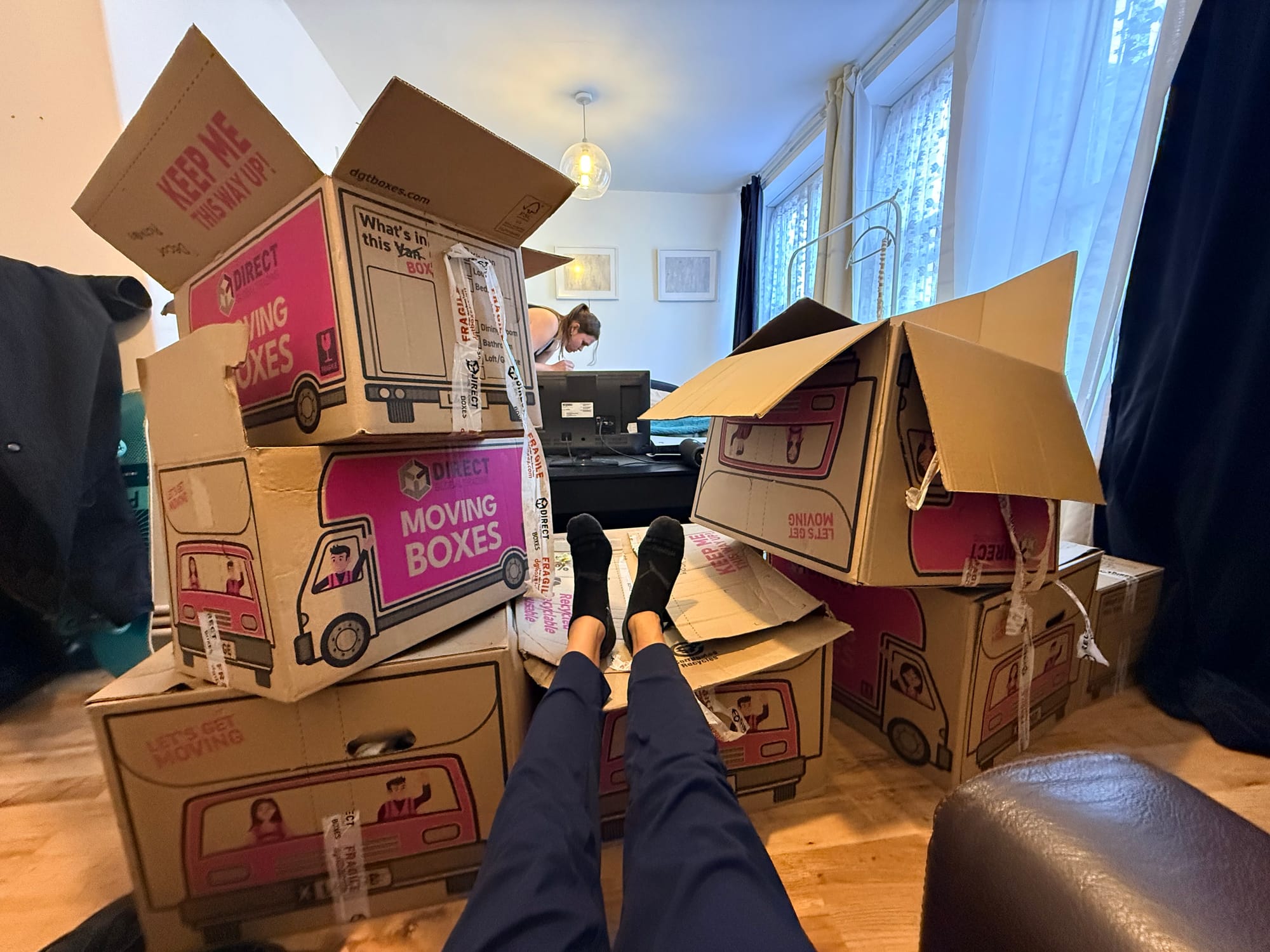
After months of video calls and patchy Starlink conversations, simply spending time with my daughter was wonderful. I helped her move approximately four hundred boxes out of her university room. I have no idea where all the possessions came from. Given her genetic heritage, however, I suspect I know exactly how she accumulated so much stuff in 9 months.
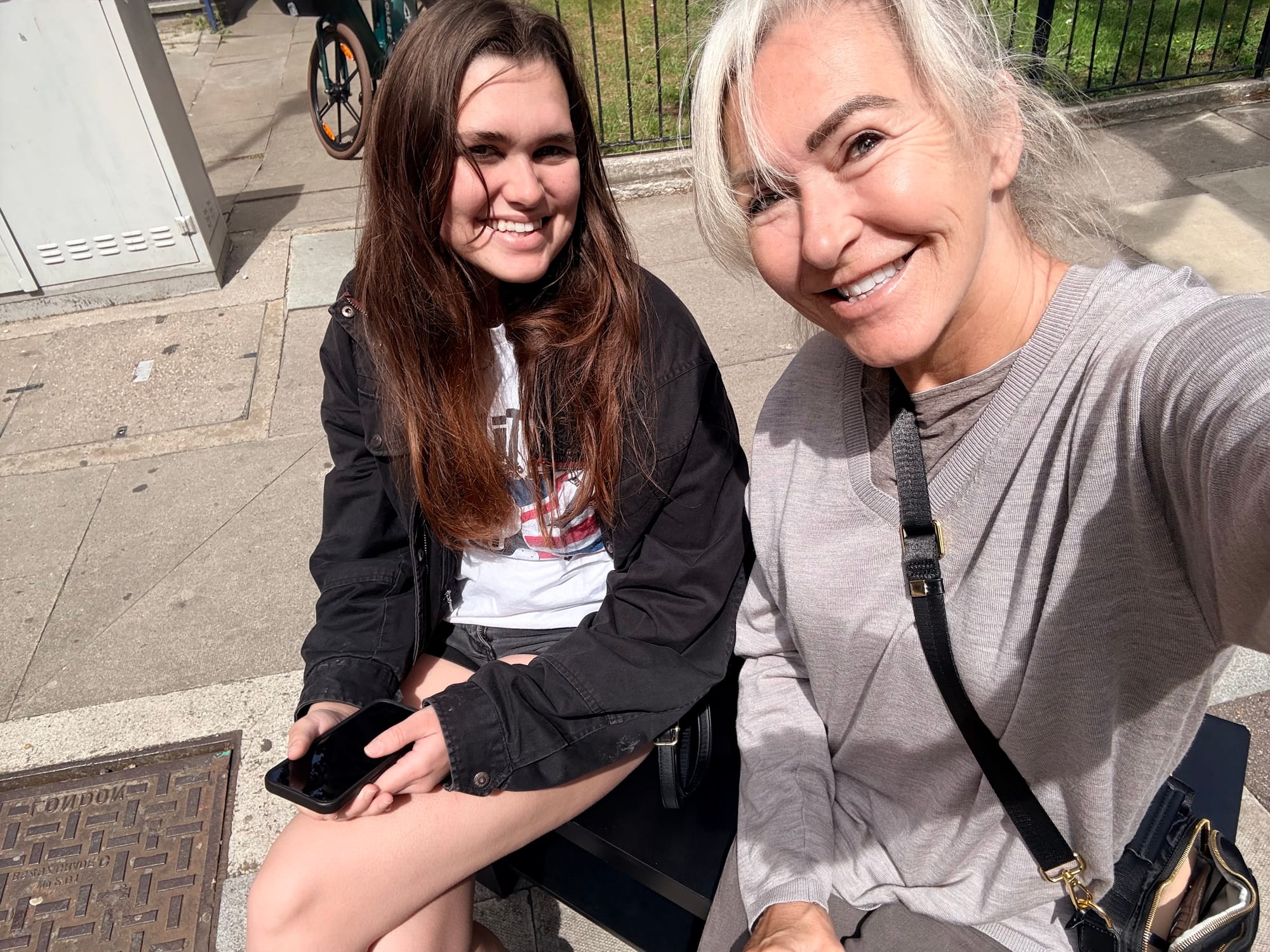
How did she accumulate so much stuff on such a tiny budget in such a short amount of time? Ah! The answer came to me while sitting on a coffee table on a London street corner I had purchased for $25 the second day I was in town, and waiting to persuade an Uber driver to take all three of us back to Elsa’s flat.
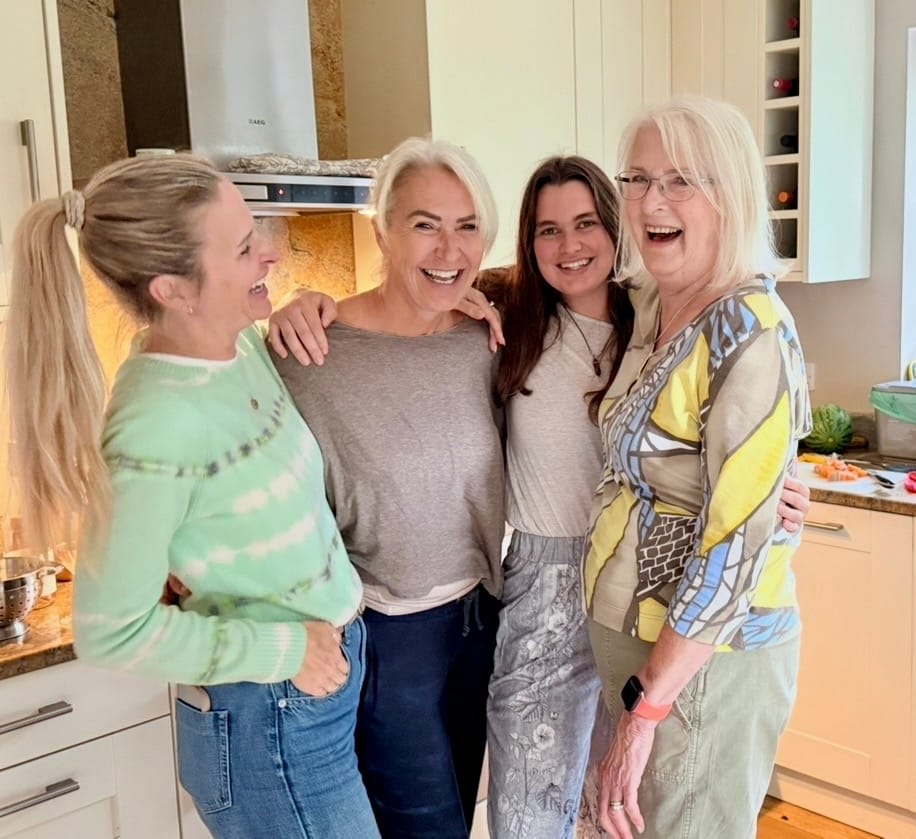
Once my Mummy Fever had been temporarily cured, we traveled to East Sussex to visit my own mum and sister. My mother never embraced downsizing, instead, after her children left home, she purchased a house large enough to accommodate all of us whenever we return. She also still has all our baby teeth. At this point, since I’m approaching 60 at an alarming rate, throwing them away would probably seem rude. Maybe as I lose more of my own teeth, I can simply add to her collection…
Mum’s house - which I had known for decades - suddenly felt enormous: I had my own bathroom. A proper shower. Unlimited hot water...After months of carefully monitoring every drop onboard, I found myself switching the water off while shampooing out of pure guilt.
My mother’s garden was another revelation. Everything seemed impossibly lush and green. She has a particular fondness for roses, including one named after my late stepfather which she greets by name whenever she passes. Fat pigeons strut around like local gourmands. Seagulls yell at everyone. Squirrels conduct what appears to be organized fight scenes. We sat outside drinking Azorean wine and cheese I had smuggled over in Gigantina and enjoyed the simple luxury of just being together.
And that’s when I realized something.
For a year before leaving, I had agonized over furniture, photographs, clothes, shoes, keepsakes and storage units. I thought giving up things would be the difficult part. But it really wasn’t.
The difficult part was missing the people I love.
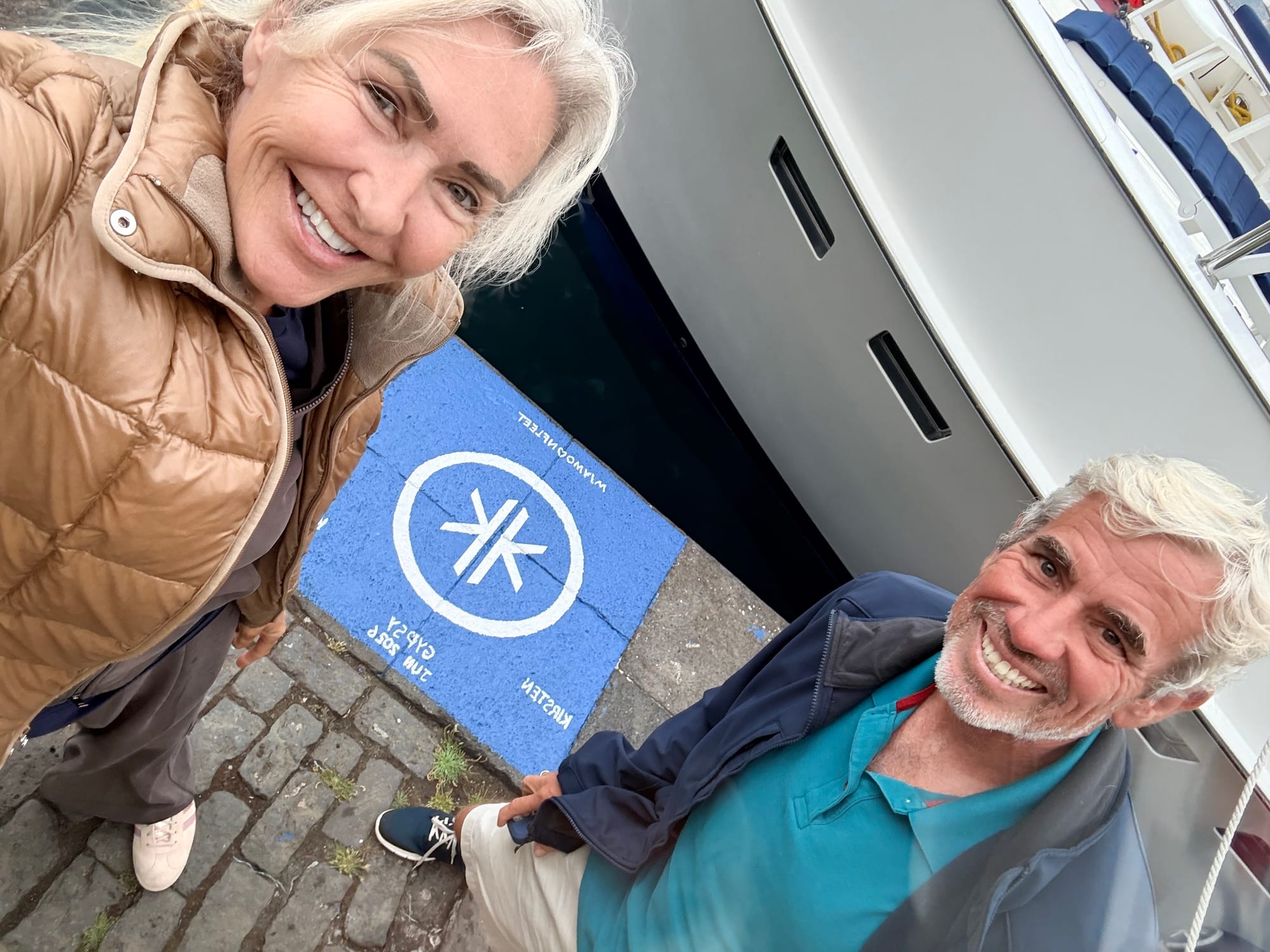
Now I’m heading back to the Azores carrying an alternator, a fuel filter, some incredibly expensive binoculars which can see in the dark and enough English delicacies to concern customs officials. Captain Silver Fox and Gypsy the Sea Dog have been waiting-somewhat impatiently-for my return.
And I’m ready. Ready for boat life again. Ready for the next adventure.
Refreshed by long showers, restored by family, and reminded that while possessions can usually be replaced (with the exception of teeth), the things we miss most are never things at all, but the people we leave behind.
Teeth, admittedly, are a close second.
Join the Crew
Like following two semi-capable adults who sold everything and sailed into the unknown? Become a crew member and get new episodes, stories and questionable decisions delivered straight to your inbox.